Shopping Cart
There are no more items in your cart
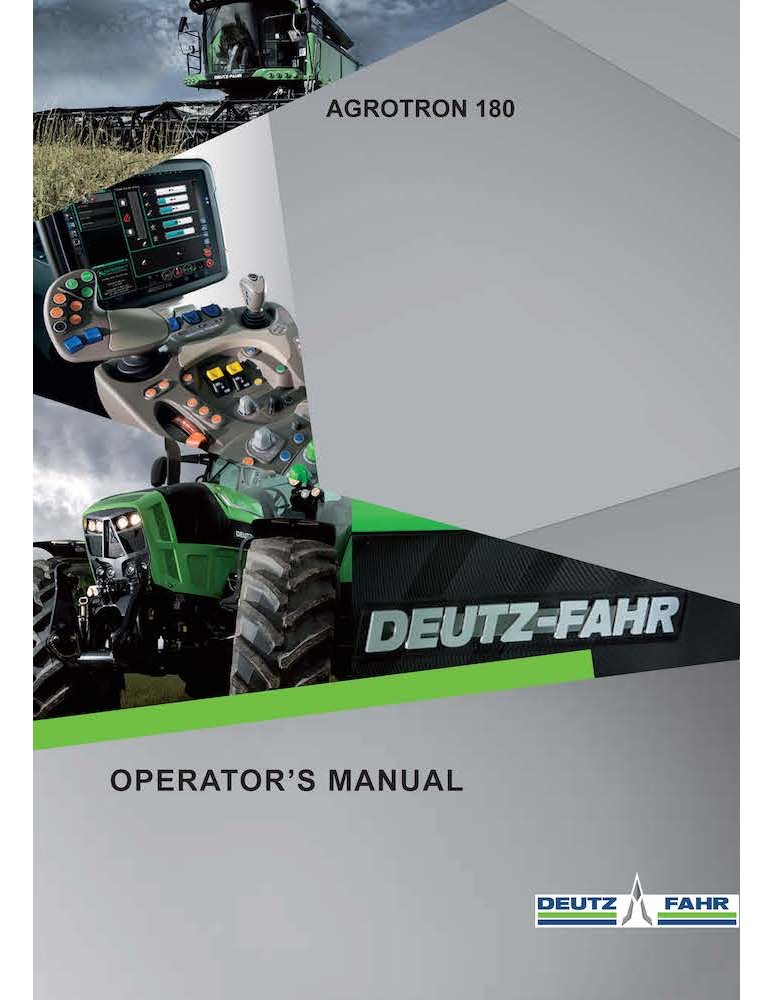
Deutz Fahr Agrotron 180 tractor pdf operator's manual
DEUTZ-307U1170EN601-OM
$13.90
No tax
Format: PDF
Pages: 311
File size: 40.93 MB
Language: English
Models: Agrotron 180
Create an account and join to our cumulative discounts program. Spend at least $29.9 and get 10.00% discount.
Rating:
(0)
Table of Contents for DEUTZ-307U1170EN601-OM-EN manual
- Preface
- Important
- 1 - IDENTIFICATION
- 1.1 - List of model serial numbers
- 1.2 - Identification plates
- 1.3 - Original spare parts
- 2 - SAFETY
- 2.1 - Introduction
- 2.2 - Practical advice on safe working procedures
- 2.3 - General safety rules
- 2.4 - Accident prevention and personal safety
- 2.5 - Operation
- 2.6 - Repairs and maintenance in safety
- 2.7 - Emergency stop
- 2.8 - Safety cab
- 2.9 - Decommissioning and disposal of the tractor
- 2.10 - Safety warning notices
- 3 - GETTING TO KNOW YOUR TRACTOR
- 3.1 - Exterior views of the tractor
- 3.2 - Access to the driving position
- 3.3 - Operator seat
- 3.4 - Steering wheel
- 3.5 - Rear-view mirrors
- 3.6 - Instruments and tractor controls
- 3.7 - Other controls
- 4 - USING THE TRACTOR
- 4.1 - Introduction
- 4.2 - Starting - Stopping the engine
- 4.3 - Transmission
- 4.4 - Four-wheel drive - Differential lock
- 4.5 - Braking
- 4.6 - Rear PTO
- 4.7 - Front PTO
- 4.8 - Hydraulic rear lift
- 4.9 - Hydraulic front lift
- 4.10 - 3-point linkage
- 4.11 - Hydraulic system
- 4.12 - Towing devices
- 5 - STORING THE TRACTOR
- 5.1 - Operations prior to long term garaging
- 5.2 - Preparing the tractor for use after a long period of inactivity
- 6 - MAINTENANCE OPERATIONS
- 6.1 - Maintenance operations
- 6.2 - Fluids / lubricants and fill volumes
- 6.3 - Service intervals
- 6.4 - Maintenance and inspection schedule
- 6.5 - Accessing the engine compartment
- 6.6 - Daily intervention
- 6.7 - Maintenance at 50 hours (1st service)
- 6.8 - Maintenance every 50 hours
- 6.9 - Maintenance every 250 hours
- 6.10 - Maintenance at 500 hours
- 6.11 - Maintenance every 500 hours
- 6.12 - Maintenance every 1000 hours or at least once a year
- 6.13 - Maintenance every 1000 hours or at least every two years
- 7 - FAULT DIAGNOSIS
- 7.1 - Towing the tractor
- 7.2 - Safe transport of the tractor
- 7.3 - Lifting the tractor
- 7.4 - Engine troubleshooting
- 7.5 - Gearbox troubleshooting
- 7.6 - Front and rear power take-off troubleshooting
- 7.7 - Front-wheel drive troubleshooting
- 7.8 - Brakes troubleshooting
- 7.9 - Lift troubleshooting
- 7.10 - Hydraulic system troubleshooting
- 7.11 - Hydraulic remote valves troubleshooting
- 7.12 - Cab troubleshooting
- 7.13 - Electrical system troubleshooting
- 7.14 - Fault diagnosis
- 7.15 - Transmission alarms
- 8 - WHEELS
- 8.1 - Introduction
- 8.2 - Tyre combinations
- 8.3 - Track width calculation
- 8.4 - Ballasting
- 9 - ELECTRICAL SYSTEM
- 9.1 - Battery
- 9.2 - Cab fuse box
- 9.3 - Lights for road use
- 9.4 - Worklights
- 9.5 - Accessories
- 10 - TECHNICAL DATA
- 10.1 - Declaration of conformity
- 10.2 - Technical data of the tractor
- 10.3 - Dimensions and weights
- 10.4 - Implement attachment diagrams
- Language
- English
- Document type
- Operator's manual
- Machinery type
- tractor

The Importance of Operator’s Manual
An Operator’s Manual is an essential instructional document designed to provide detailed guidance for anyone responsible for the daily operation and care of your machine. This manual serves as the primary resource for understanding the specific capabilities, controls, and technical requirements of your equipment.
The manual begins with a comprehensive overview of the, including vital safety warnings and precautions to ensure the protection of both the operator and the machinery. It provides clear, step-by-step instructions for the initial setup, routine operation, and ongoing maintenance. To ensure clarity, the guide features detailed diagrams and high-quality illustrations that simplify complex components and mechanical workflows.
Beyond basic usage, this PDF Operator’s Manual includes expert troubleshooting tips. By providing solutions for common operational issues, the manual helps users minimize downtime, prevent costly repairs, and maximize the lifespan of their equipment. Choosing a digital PDF format ensures you have instant access to this critical information whenever and wherever it’s needed.
Tap to zoom